Does Coloring Actually Help With Anxiety? What the Research Says — and How to Use It Well
Coloring is sold as an anxiety cure. The studies are more interesting than that: small, short-term drops in state anxiety, mandalas no better than free drawing in a 2021 meta-analysis, and real benefits for some groups. What the evidence supports, what it doesn’t, and how to use coloring so it actually helps.
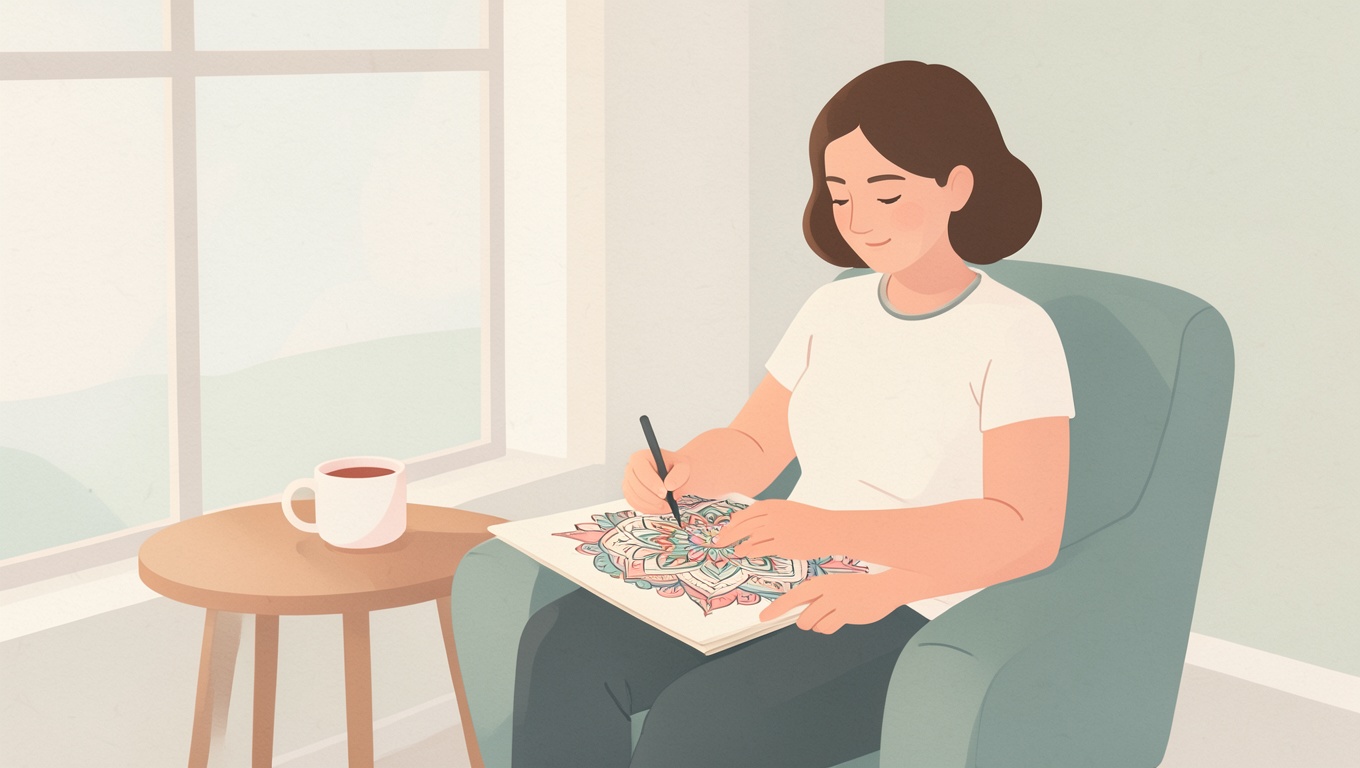
Short answer: yes, with caveats worth knowing. Controlled studies consistently find that 15–30 minutes of coloring lowers state anxiety — the in-the-moment kind — by a modest amount, comparable to other quiet, focused activities. The famous claim that mandalas specifically are special does not hold up well: a 2021 systematic review and meta-analysis of eight studies found mandala coloring no more effective than free drawing. Coloring is not a treatment for an anxiety disorder, and it isn’t “art therapy” (which is a clinical practice with a trained therapist). It is a cheap, accessible, low-stakes way to settle down for twenty minutes, and for some people that is exactly what they need. Here is what the research actually shows, and how to get the most out of it.
Where the “coloring reduces anxiety” idea comes from
The modern claim traces to a 2005 study by Nancy Curry and Tim Kasser (“Can Coloring Mandalas Reduce Anxiety?”, Art Therapy). Undergraduates were made anxious with a writing task, then randomly assigned to color a mandala, color a plaid pattern, or draw freely on blank paper. Anxiety — measured with the State-Trait Anxiety Inventory — fell most in the mandala and plaid groups. It was a small study, but it was clean, and it launched a thousand blog posts.
A 2012 replication by van der Vennet and Serice (Art Therapy, 29(2)) found the mandala group’s anxiety dropped more than the free-drawing group’s again, with a smaller effect. Since then there have been a couple of dozen small studies in students, nurses, older adults, women in menopause, people awaiting medical procedures, and so on.
What the better evidence says
- Short-term state anxiety goes down. This is the most consistent finding. Twenty minutes of coloring reliably lowers self-reported anxiety immediately afterwards. Flett and colleagues (2017, Creativity Research Journal) found that a week of daily coloring reduced depressive symptoms and anxiety in adults compared with a logic-puzzle control — one of the few studies to look past a single session.
- Mandalas are probably not magic. The 2021 systematic review and meta-analysis in Art Therapy (“The Effect of Mandala Coloring on State Anxiety”) pooled eight studies with 578 participants and found mandala coloring did not reduce anxiety significantly more than free drawing. The original 2005 paper was the outlier; newer and larger studies clustered near zero difference. In other words: coloring helps, and the structured circle isn’t the active ingredient.
- Some groups benefit clearly. A randomized controlled study of community-dwelling older adults in Taiwan (Koo and colleagues, 2020, PMC) found a short mandala-coloring program significantly lowered anxiety versus controls. Small trials in people facing medical stress — waiting for procedures, in menopause, in hospital — tend to show similar modest drops.
- It works about as well as the comparison activity. When studies compare coloring with another quiet, absorbing task (reading, a logic puzzle, free drawing), coloring usually does as well and sometimes better; it rarely crushes the alternative. The common thread is attention: doing one low-pressure thing with your hands for a while.
- Nobody has shown it treats an anxiety disorder. The outcome measured is almost always state anxiety immediately after a session. Trait anxiety, clinical diagnoses and long-term outcomes are either unmeasured or unchanged. If anxiety is interfering with your life, coloring is a pleasant addition to treatment, not a substitute for a clinician.
Why it helps, as far as anyone can tell
A few mechanisms are plausible and not mutually exclusive. Focused attention on a simple task crowds out rumination — the same logic as knitting, jigsaw puzzles or mindfulness exercises. Repetitive hand movement is soothing for many people. Low stakes and a guaranteed result (the page is already drawn; you can’t really fail) make it easier to start than “real” art. And choice and control — you pick the colors, the pace, when to stop — is a small but real counterweight to feeling overwhelmed. Whether the page is a mandala, a forest scene or a cartoon dog seems to matter less than whether it’s absorbing enough to hold you and simple enough not to frustrate you.
How to use coloring so it actually helps
- Pick a page that’s absorbing but not fiddly. Enough detail to hold attention for 20 minutes, not so much that you tense up. Medium-complexity mandalas, nature scenes and patterns are popular for a reason — our mandala pages and flower pages are a reasonable starting shelf — but if you’d rather color dinosaurs, color dinosaurs.
- Give it 15–30 minutes. That’s the dose in nearly every study. Longer is fine; a rushed five minutes probably isn’t enough to shift anything.
- Put the phone somewhere else. The benefit appears to come from uninterrupted attention. A podcast or music is fine for most people; notifications are not.
- Lower the bar. Cheap pencils, printer paper, no technique goals. The moment it becomes a project you can do badly, it stops being restful. (If you want technique, that’s a separate, equally valid pleasure — see colored pencils for beginners — but don’t confuse the two aims.)
- Make it a routine, not a rescue. The one study that looked at a week of daily practice found more than a single session did. Ten minutes most evenings beats an hour once a month.
- Use it as a bridge. Coloring is good at getting you from “wired” to “settled enough to do the next thing” — sleep, a conversation, a task you’ve been avoiding.
Coloring vs. art therapy
“Art therapy” is a clinical discipline: a trained therapist uses art-making inside a therapeutic relationship, with goals and assessment. A coloring book is not that, and art therapists have been gently pointing this out since the “adult coloring book” boom — not to dismiss coloring, but because the phrase on the cover oversells it. Coloring is better described as a self-care or relaxation activity. If you’d like something more structured, look for a registered art therapist; if you just want to feel calmer this evening, a coloring page is a fine tool.
Who it tends to suit — and who it doesn’t
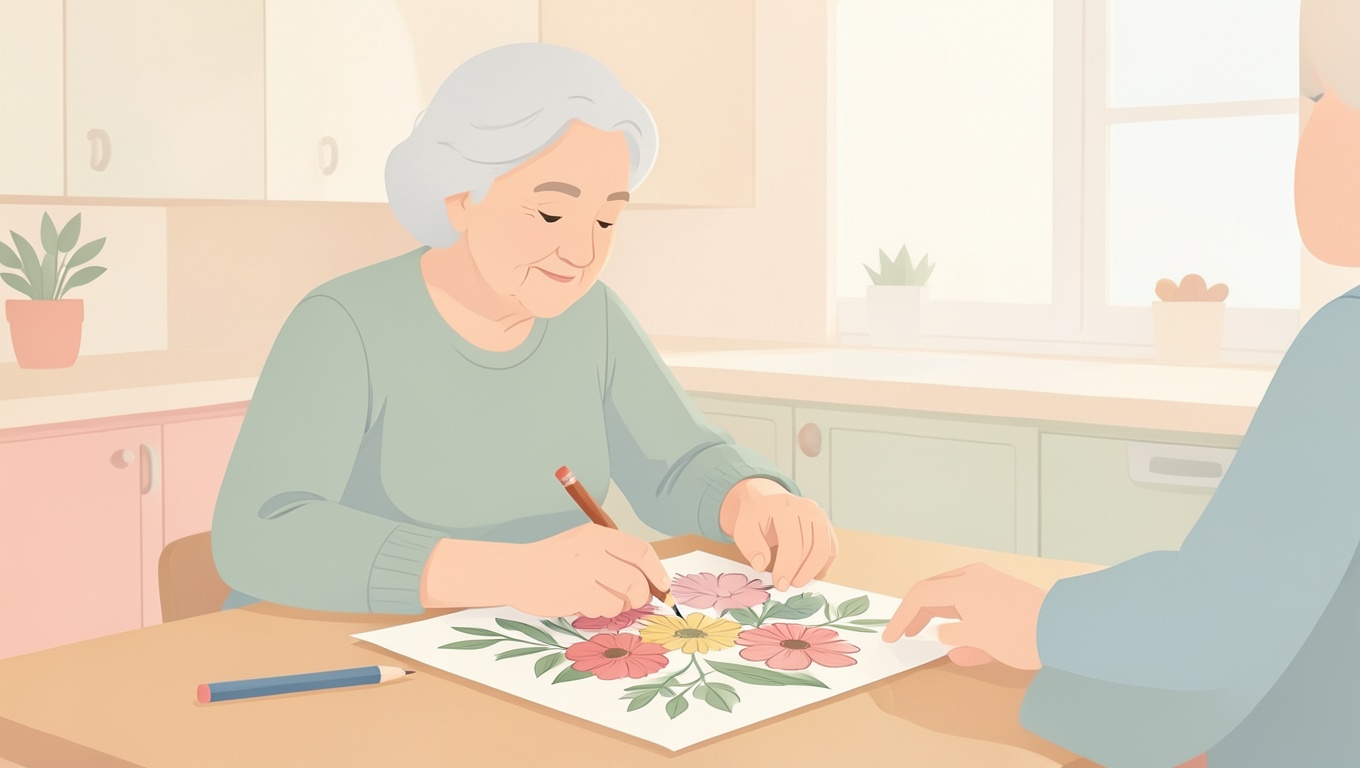
It suits people who find their thoughts spiral when their hands are idle, people who can’t sit still for meditation, people recovering from a stressful day, people in waiting rooms and hospital beds, and older adults looking for a calm daily activity (we cover that audience specifically in our guide to coloring for seniors and people with dementia). It suits children too, though the research above is almost entirely adult.
It doesn’t suit everyone. Some perfectionists find a printed page more stressful than a blank one; some people simply find it boring, which cancels the benefit. If coloring makes you tense, the evidence says free drawing, a puzzle or a walk will do the same job. The activity is not sacred; the twenty quiet minutes are.
Frequently asked questions
Is there scientific evidence that coloring reduces anxiety?
Yes — multiple small randomized studies show a modest, short-term reduction in state anxiety after 15–30 minutes of coloring. The evidence for long-term effects or for clinical anxiety is thin to absent.
Are mandalas better than other coloring pages for anxiety?
The 2005 study said yes; a 2021 meta-analysis of eight studies says mandalas were not significantly better than free drawing. Pick whatever holds your attention.
Is coloring a form of mindfulness?
It shares the key feature — sustained attention on one simple thing — and many people use it that way. Formal mindfulness training has a much larger evidence base; coloring is an easier on-ramp.
How long should I color to feel calmer?
Studies use about 20 minutes. Start there. If ten minutes works for you, ten minutes is fine.
Can coloring help with panic attacks?
Some people find a focused, repetitive task useful while a wave passes, and coloring is one option. It isn’t a treatment for panic disorder; if attacks are frequent or frightening, talk to a doctor.
Does it matter if I use crayons, pencils or markers?
Not for the anxiety effect. Use what you enjoy and what doesn’t frustrate you; pencils are the most forgiving on printer paper.
If you want to try it tonight, print something medium-detailed from the free coloring pages, put the phone in another room, and give it twenty minutes. Whether it becomes a habit is the only test that matters.