Crayons vs Colored Pencils vs Markers: Which to Give a Toddler, Preschooler or Older Kid
Crayons for toddlers, pencils when control arrives, markers once the tip survives — with the reasons (pressure, grip, bleed, washability) so you can make the call for your own child rather than by age alone.
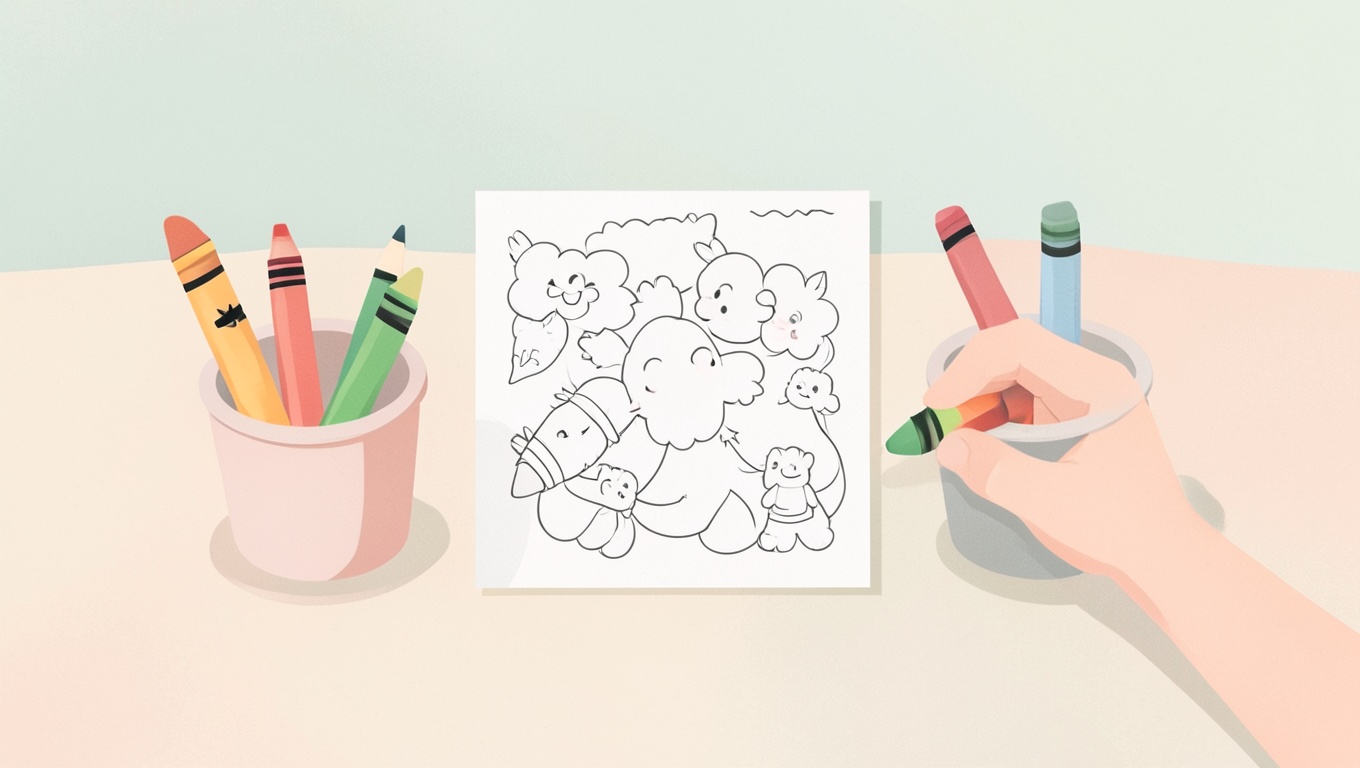
Short answer: crayons first — chunky ones for 1–3-year-olds, regular ones from about 3 — because they need pressure (which builds hand strength), don’t dry out, don’t bleed, and survive being chewed. Washable markers from around 4, once a child stops mashing the tip and wants bright, effortless color. Colored pencils from about 4–5, when a tripod-ish grip and some control make precision rewarding. Most 6–8-year-olds happily use all three. The reasons behind those ages are below, because the right answer for your child depends on grip, strength and temperament more than on birthdays.
What each tool demands of the hand
| Crayons | Colored pencils | Markers (washable / water-based) | |
|---|---|---|---|
| Pressure needed | Medium–high (builds strength) | Medium, controlled | Almost none |
| Forgives a fist grip? | Yes, especially chunky ones | Poorly — breaks, smears | Yes, but tips get crushed |
| Precision available | Low–medium | High | Medium |
| Mess / bleed | Low; can mark tables | Very low | Skin, clothes; show-through on thin paper |
| Maintenance | None; breaks happen | Sharpening | Caps! Dries out if left open |
| Cost per page | Lowest | Low | Highest (they run out) |
| Safety for mouthing | Non-toxic, big = low choke risk | Sharp points; small bits | Caps are a choke hazard |
Toddlers (1–3): chunky crayons, and not much else
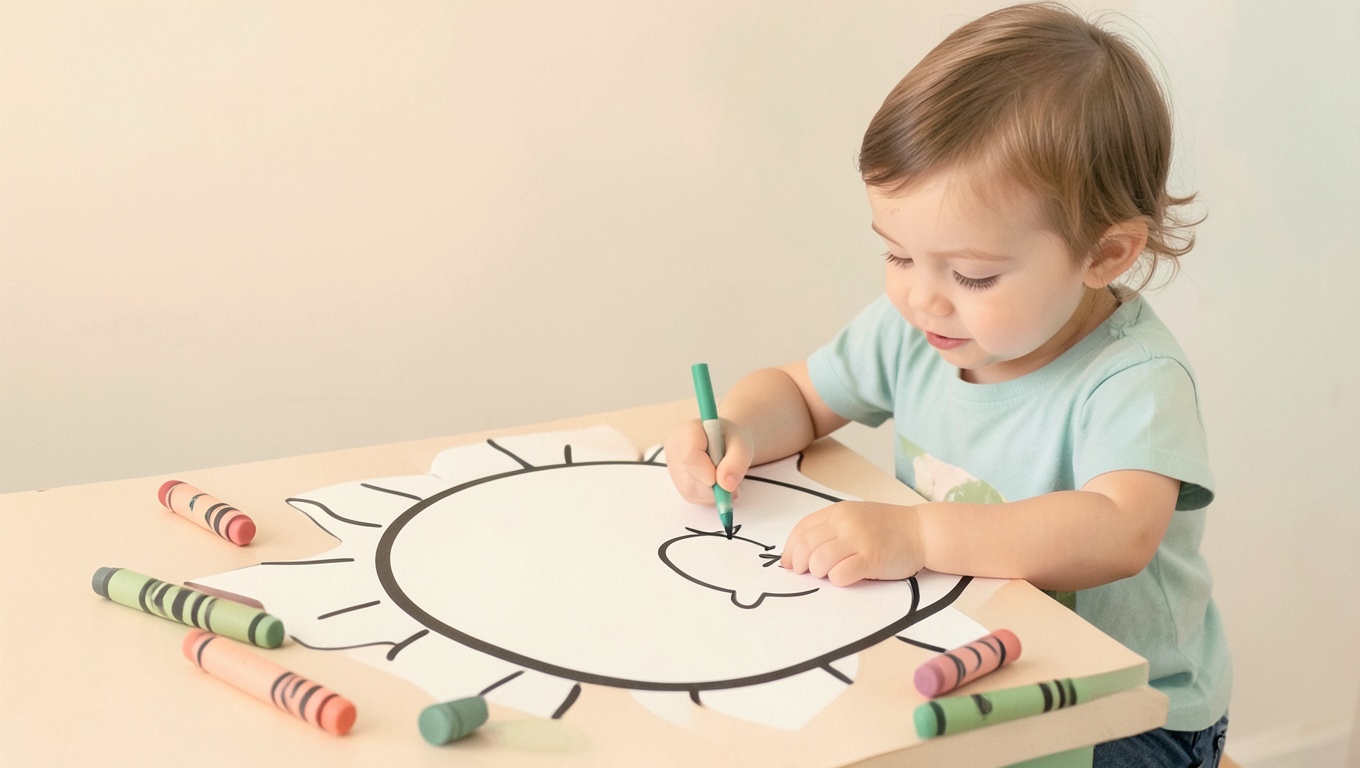
At this age the child’s grip is a fist and the goal is making marks and enjoying it. Chunky, egg-shaped or triangular crayons fit that grip, are hard to snap, and are big enough not to be a choking hazard. They also require pressure, and pressing is exactly the resistance that builds the small muscles a pencil will need later. Washable is worth the small premium: crayon on a wall is one of the rites of parenting.
Markers at this age are tempting because they make vivid color with no effort — which is precisely the problem; there’s no strength-building, the tips get crushed by a fist, caps end up in mouths, and the color ends up on everything. If you do use them, choose chunky washable toddler markers with a blunt dome tip and supervise. Colored pencils are simply frustrating for most toddlers: too thin, too little color per stroke, and the points snap.
What to give them to color: large paper, or pages with one or two huge shapes and thick outlines. Our easy coloring pages are made for this. For the developmental picture behind all of this, see coloring skills by age.
Preschoolers (3–4): regular crayons, markers on a trial basis
As a tripod-ish grip emerges and the child aims at shapes, regular crayons work and so do thick triangular colored pencils, which nudge fingers into a better hold. This is the age to try washable markers with a “kid” tip: some children take to them immediately, some still mash them. A good sign they’re ready: the marker lasts more than a week with the tip intact.
Keep markers capped between uses (the classic trick: stand the caps in a row in a lump of playdough or a cap-holder so they go back on), and print marker pages single-sided on slightly heavier paper — see best paper for coloring pages. Paper pads or cheap copy paper under the page save the table.
Ages 4–6: all three, each for a different job
Once a child can color mostly inside the lines on big shapes, the tools start to separate by what they’re good for:
- Crayons for speed, big areas, and texture rubbings. Still the best everyday tool for quick pages.
- Colored pencils for detail and control — small shapes, careful edges, mixing two colors. This is when pencils become satisfying rather than frustrating. A 12–24 set of decent school pencils is plenty; soft “artist” pencils break under preschool pressure.
- Markers for bold, even color and for kids who press lightly or tire quickly; also for children with weak hands, since markers need almost no force. Washable, broad and fine tips, always capped.
A useful mix for a five-year-old is a box of crayons, a small set of pencils, and ten washable markers — not a 120-pack of anything.
Ages 6–8: let preference lead, add quality where it’s noticed
Older kids develop preferences: some want the precision of pencils and start shading; some love markers’ saturated color; some stay loyal to crayons. All are fine. This is the age where a step up in pencil quality is actually noticed — softer leads, better pigment — and where fine-tip markers and gel pens start to appeal for detail. If they’re into it, the techniques in colored pencils for beginners are entirely usable by an eight-year-old.
Special cases
- Weak hands / low tone / tires quickly: markers give a big result for little effort and keep the child engaged; pair with short crayon sessions to build strength. An OT can advise on grip aids if the child is in therapy.
- Heavy pressers / constant breakage: chunky crayons, triangular pencils, and a reminder to “color like you’re petting a cat.” Softer pencils break more — choose a firmer school set.
- Sensory sensitivities: some children dislike the waxy drag of crayons or the squeak of markers; try the other tool rather than pushing through.
- Left-handed: same tools; pencils smudge less than markers under a left hand moving across the page, and angling the paper helps.
- Group settings / classrooms: crayons and pencils for anything unsupervised; markers only when an adult can manage caps and paper.
Twistables, gel crayons, and other in-betweens
Twistable crayons (wax in a plastic barrel) don’t snap and don’t need peeling, which parents love, but the barrel is thin and slippery for small hands and they deliver less color per stroke. Gel crayons glide like lipstick and are great for kids who press lightly, but they smear and dry slowly. Watercolor pencils are fun from about 6 if you add water, and need heavier paper. None of these change the age guidance above; they’re variations on the same three families.
Frequently asked questions
Are crayons or colored pencils better for toddlers?
Crayons — chunky ones. They suit a fist grip, build strength through pressure, don’t need sharpening and don’t snap. Pencils frustrate most children under about four.
What age can a child use markers?
Washable toddler markers with supervision from about 2 if you like, but the sweet spot is around 4, when the child stops crushing the tip and can manage caps. Single-sided pages, slightly heavier paper.
Crayons or markers for preschool?
Crayons as the default, markers as a treat or for specific activities. Crayons build the hand; markers reward the eye.
When should kids switch from crayons to colored pencils?
There’s no switch — add pencils around 4–5 when the child wants more control and keep crayons for quick, big coloring. Many adults still use both.
Are twistable crayons better than regular crayons?
They’re more convenient (no breaking, no peeling) but thinner and slipperier in small hands, and they lay down less color. Fine from about 4; chunky wax crayons are better for the youngest.
Whatever the tool, the page has to match the child: big shapes and thick lines for the youngest, detail only when control arrives. The next guide in this series looks at exactly what makes a coloring page work for a toddler.