Best Paper for Coloring Pages: Weights for Crayons, Colored Pencils, Markers and Gel Pens
Paper matters more than the brand of crayon or marker. Here are the weights (lb and gsm) that work for crayons, colored pencils, water-based and alcohol markers and gel pens — and what your home printer can actually feed.
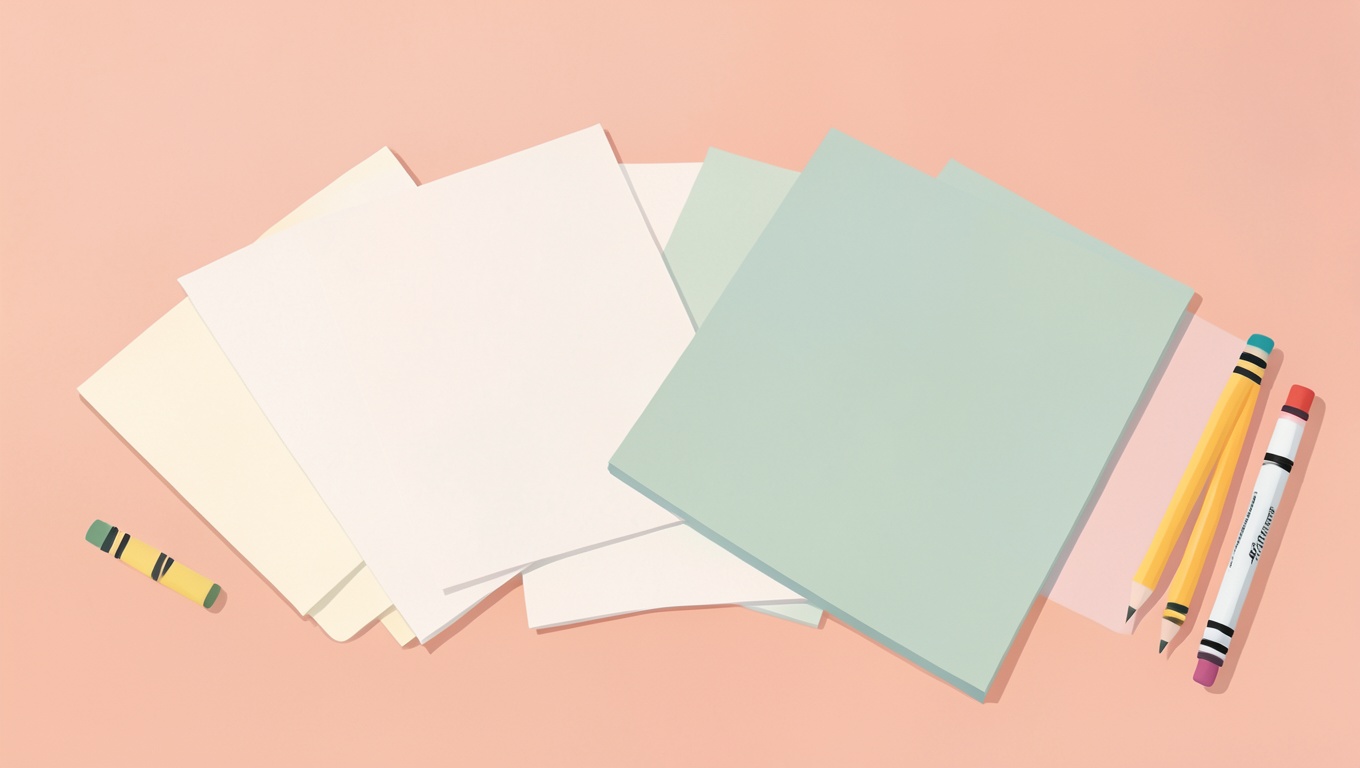
Short answer: ordinary 20 lb (75 gsm) copy paper is fine for crayons and colored pencils. Step up to 24–32 lb (90–120 gsm) if you want less show-through and a sturdier page, and to 65 lb cardstock (about 176 gsm) or dedicated marker paper if alcohol markers are involved. Printer paper is also the right choice for most kids’ coloring, because it’s cheap, feeds reliably, and takes crayon and pencil well. Everything below is about the exceptions — and the confusing way paper is labeled.
Paper weight, decoded: lb vs gsm
In the US, paper is sold by “pound” weights that depend on the paper category (bond, text, cover, index), which is why 65 lb cover is much thicker than 32 lb bond even though the number is only double. Grams per square meter (gsm) is unambiguous — it’s the same scale for every paper — so use gsm when comparing. Rough equivalents:
| Common label | gsm | Feels like | Good for |
|---|---|---|---|
| 20 lb bond (standard copy paper) | 75 | Everyday printer paper | Crayons, colored pencils, pencil; kids’ pages |
| 24 lb bond | 90 | Slightly crisper, less floppy | Crayons, pencils, light water-based markers |
| 28 lb bond | 105 | Noticeably sturdier | Pencils, water-based markers, gel pens |
| 32 lb bond | 120 | “Premium presentation” paper | Pencils with heavy layering, gel pens, light markers |
| 65 lb cover (light cardstock) | 176 | Greeting-card stiffness | Alcohol markers (with a backing sheet), display pieces |
| 80 lb cover | 216 | Heavy cardstock | Alcohol markers; upper limit of many home printers |
| 110 lb index / 110 lb cover | 199 / 298 | Postcard to very stiff | Mostly too heavy to feed; the two “110 lb” papers are very different |
| Marker paper (bleedproof) | 70–75 (coated) | Thin but treated | Alcohol markers — stops bleed despite being thin |
Two practical notes. First, the surface matters as much as the weight: a smooth bright white sheet takes marker cleanly and shows pencil color vividly; a glossy or coated “photo” sheet does not — wax and pigment skid on it. Second, brightness ratings (92, 96, 98+) only describe how white the paper looks; they say nothing about thickness.
Best paper by what you color with
Crayons
Crayons are the most forgiving medium and the least fussy about paper. Standard 20–24 lb copy paper is ideal: it has just enough texture (“tooth”) for wax to grip, it’s cheap enough to print in bulk, and young kids press hard enough that heavier paper doesn’t buy you anything. If crayons tear through a page, that’s a pressure or age question, not a paper one — a slightly heavier 28 lb sheet helps, but so do chunkier crayons. Cardstock works too, and is a good choice for pages that will be displayed or turned into cards.
Colored pencils
Pencils reward a little tooth. Very smooth, very hard papers don’t hold much pigment, so layers look pale and streaky; very rough papers show white speckles in the valleys. Regular copy paper sits in a reasonable middle for casual coloring. If you layer and blend seriously, 28–32 lb paper or a 65 lb cardstock feels better under the pencil, tolerates burnishing without buckling, and takes several layers before it “fills up” and stops accepting color. Bright white paper makes colors read more saturated; cream or recycled greys mute them slightly, which some people prefer for a softer look.
Water-based markers (Crayola and similar)
Water-based markers don’t usually bleed through standard paper, but they do show through — you can see the color from the back — and they feather at the edges if the paper is very absorbent. 24–28 lb paper is the sweet spot: thick enough to hide show-through on a single-sided page, smooth enough that edges stay crisp. Printing single-sided and giving kids a backing sheet covers the rest.
Alcohol markers (Copic, Ohuhu, Arteza, Prismacolor Premier and similar)
Alcohol ink is thin and wicks straight through most papers, so this is the one case where regular printer paper genuinely fails — color soaks through to the next sheet and the table, and lines feather. You have two sensible options:
- 65–80 lb cardstock (176–216 gsm), smooth finish. Widely available, feeds through most home printers via the rear or manual tray, and thick enough that a backing sheet catches any strike-through. The trade-off: cardstock absorbs more ink, so markers run dry faster and blending takes more passes.
- Marker paper (“bleedproof”). Thin paper with a coating that keeps ink on the surface, which is why it blends so smoothly and uses less ink. It’s sold in pads, and it’s often too light or slippery for a printer to feed reliably — check the pad says it’s printer-compatible, or print your line art on cardstock and use marker paper for freehand work.
Whatever you choose, put a spare sheet underneath. We go into the causes and the fixes for marker bleed in a separate guide.
Gel pens and fineliners
Gel pens glide on smooth, medium-weight paper and drag or skip on rough stock. 24–32 lb smooth paper or smooth cardstock is the comfortable range. Metallic and glitter gels take a moment to dry on coated papers, so give them time before turning the page.
Watercolor pencils or a light wash
If you plan to add water, you are outside what a printer will usually feed: watercolor paper is typically 140 lb / 300 gsm. Print the line art on your heaviest printable cardstock and keep the water minimal, or trace the design onto watercolor paper with a light box. A wet page on copy paper will cockle (ripple) and can tear.
What your printer will actually feed
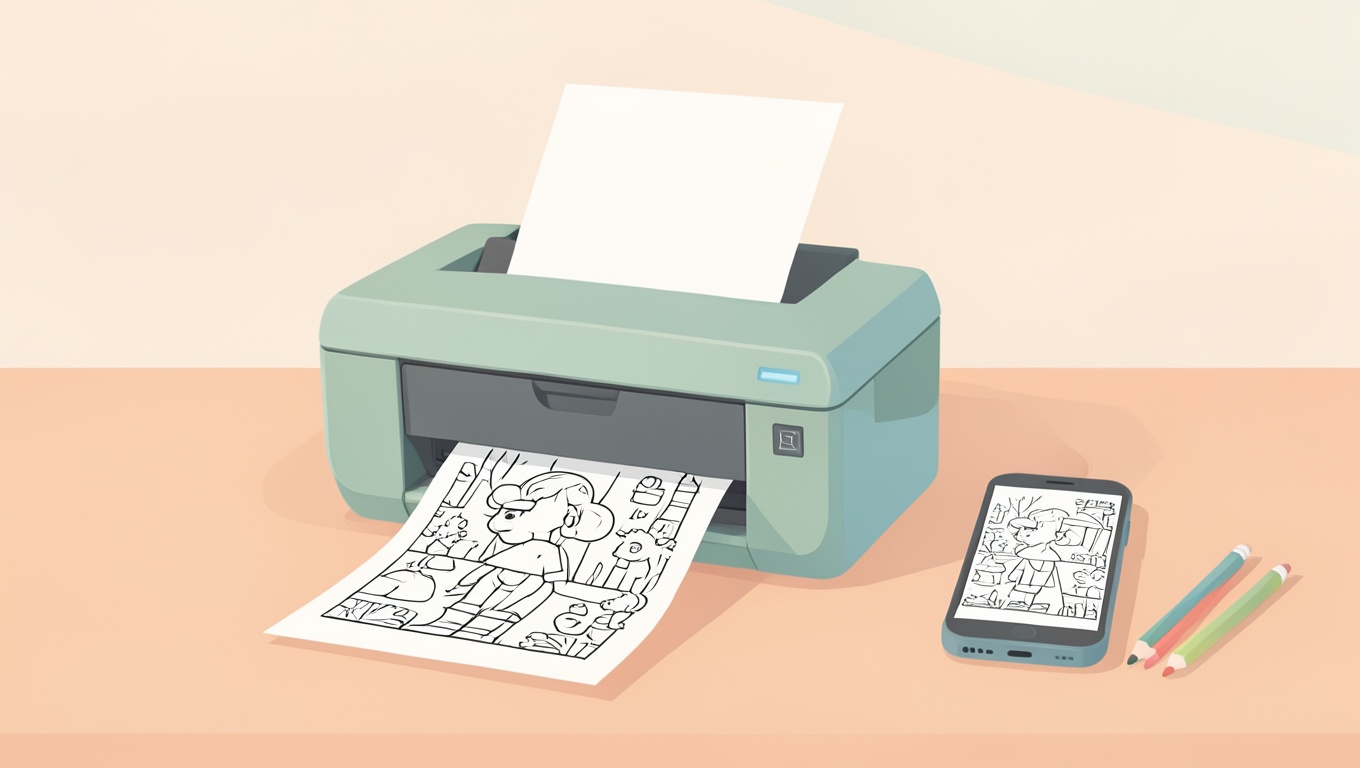
Check the maximum paper weight in your printer’s spec sheet — it’s usually listed in gsm. Common ranges:
- Home inkjets: the main tray often tops out around 90–105 gsm; the rear or manual feed commonly accepts up to 200–300 gsm. Load cardstock one or a few sheets at a time.
- Home and small-office lasers: often rated to 160–220 gsm through the bypass tray. Select the “Heavy” or “Cardstock” media type so the fuser runs hotter; on thick paper with the plain-paper setting, laser toner can rub off.
- Inkjets on cardstock: the opposite advice — leave the media type on Plain. The “cardstock” and “photo” settings lay down more ink and slow the print, which can actually soften black outlines.
If a thick sheet jams or skews, fan the stack, load fewer sheets, and use the straightest paper path (rear feed rather than the front cassette). If your printer simply can’t take the weight, a print shop or library will, and you can ask for 28 lb, 32 lb or 65 lb cover by name.
Double-sided coloring books and bound pages
Commercial coloring books print on anything from 50 lb text (about 75 gsm) in cheap kids’ books to 70–80 lb text (105–120 gsm) in books aimed at adults. Print-on-demand services use a standard white or cream book stock that is fine for pencil and crayon but not for alcohol markers; that’s why almost every marker-focused book is printed single-sided. If you’re making your own book, print single-sided if markers are likely, and leave the back of each page blank or patterned so a bleed-through doesn’t ruin the next design.
Our short recommendations
- Kids, crayons, lots of pages: plain 20 lb copy paper. Spend the savings on more pages.
- Pencils, occasional markers, a nicer feel: 24–28 lb (90–105 gsm) bright white.
- Serious pencil layering or gel pens: 32 lb (120 gsm) smooth, or 65 lb cardstock.
- Alcohol markers: 65 lb smooth cardstock through the rear tray, with a backing sheet; or printer-friendly marker paper.
- Anything you’ll frame, mail or hang: 65–80 lb cardstock.
Frequently asked questions
Is cardstock good for coloring pages?
Yes, especially for markers and for pages you want to keep. It’s stiff, it resists bleed-through, and it takes pencil well. The downsides are cost, a slower/more careful print, and more ink consumed by alcohol markers. For everyday kids’ coloring it’s overkill.
What does “24 lb paper” mean?
It’s a bond weight, roughly 90 gsm — about 20% heavier than standard 20 lb copy paper. It’s a good, inexpensive upgrade that reduces show-through and feels less flimsy, and it feeds through any printer.
Can I print coloring pages on cardstock at home?
Usually, yes. Check your printer’s maximum gsm, use the rear or manual feed, load a few sheets at a time, keep inkjets on the Plain setting, and set lasers to Heavy/Cardstock.
What paper is best for Crayola markers?
Smooth 24–28 lb paper. It’s thick enough to hide show-through and smooth enough that lines don’t feather. Print single-sided.
Is glossy or photo paper good for coloring?
No. Crayons and pencils skid on the coating and markers smear and take ages to dry. Use uncoated paper or smooth cardstock.
Does paper color matter?
Bright white shows colors most vividly and is the usual choice. Cream softens everything slightly and is easier on the eyes for long adult sessions; it’s common in printed coloring books. Either is fine — pick what you like.
Paper sorted? If the printout itself isn’t sharp, the fix is almost always in the file or the print settings — see how to print coloring pages without blurry lines. And if you want something to test your paper on, our free coloring pages print cleanly on all of the above.