Coloring Skills by Age: What to Expect From 1 to 8 (and How to Help Without Pushing)
Scribbling at one, circles at three, “inside the lines” around five — the milestones occupational therapists actually use, what they look like on a coloring page, and how to help without turning coloring into a test.
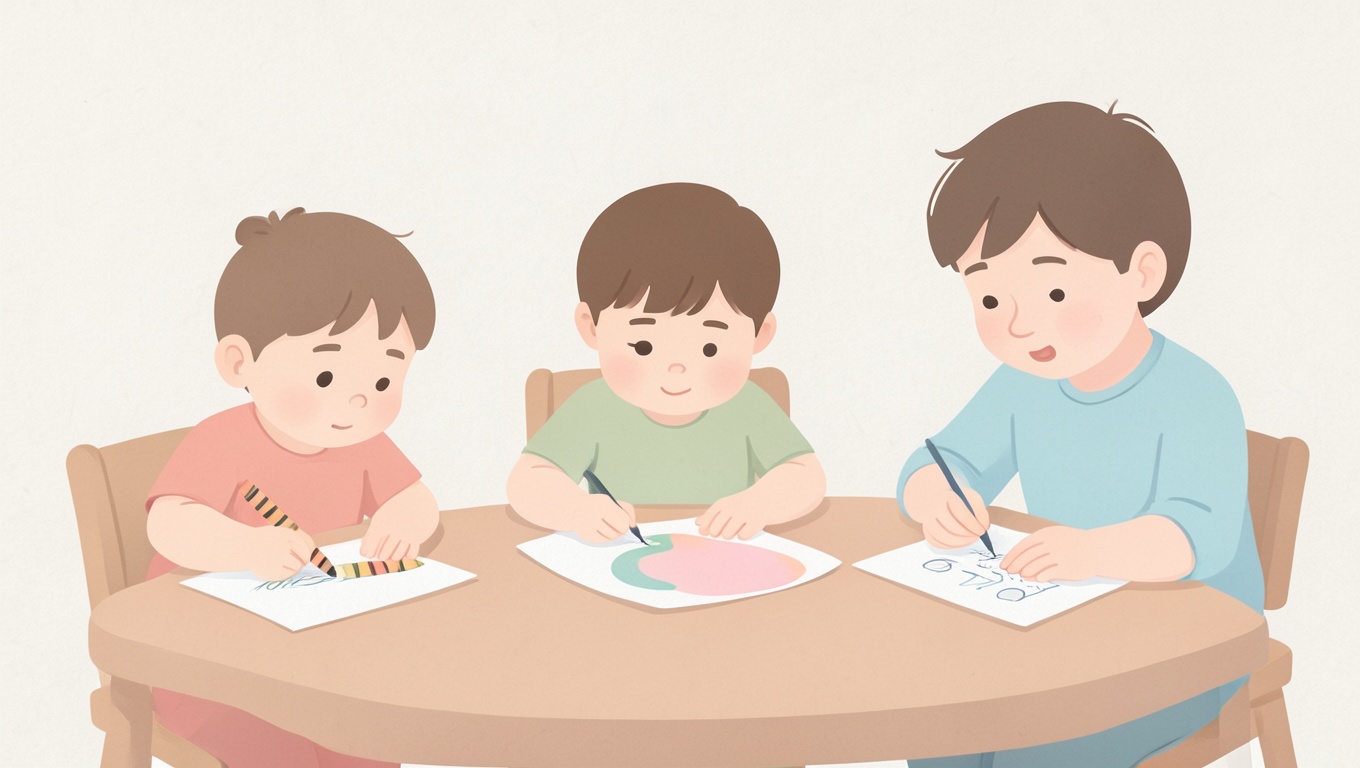
Short answer: children scribble spontaneously around 12–18 months, imitate lines and round scribbles at about 2, draw a circle near 3, and color reasonably “inside the lines” on big simple shapes somewhere between 4 and 5 — with a wide normal range around all of those. Coloring neatly is an outcome of hand and eye development, not a skill to drill, so the most useful thing a parent can do is match the page and the tool to the child’s stage, keep sessions short, and resist correcting. Here’s what each age typically looks like, what to put in front of them, and when a conversation with a pediatrician or occupational therapist is reasonable.
One caveat up front: the ages below are typical ranges drawn from developmental milestone charts used by occupational therapists and pediatric sources. Individual children vary by many months, and interest varies even more than ability. A four-year-old who won’t sit for coloring is not behind; a child who can’t hold a crayon at all at four is worth a conversation with your pediatrician.
Ages 1–2: scribbling is the whole point
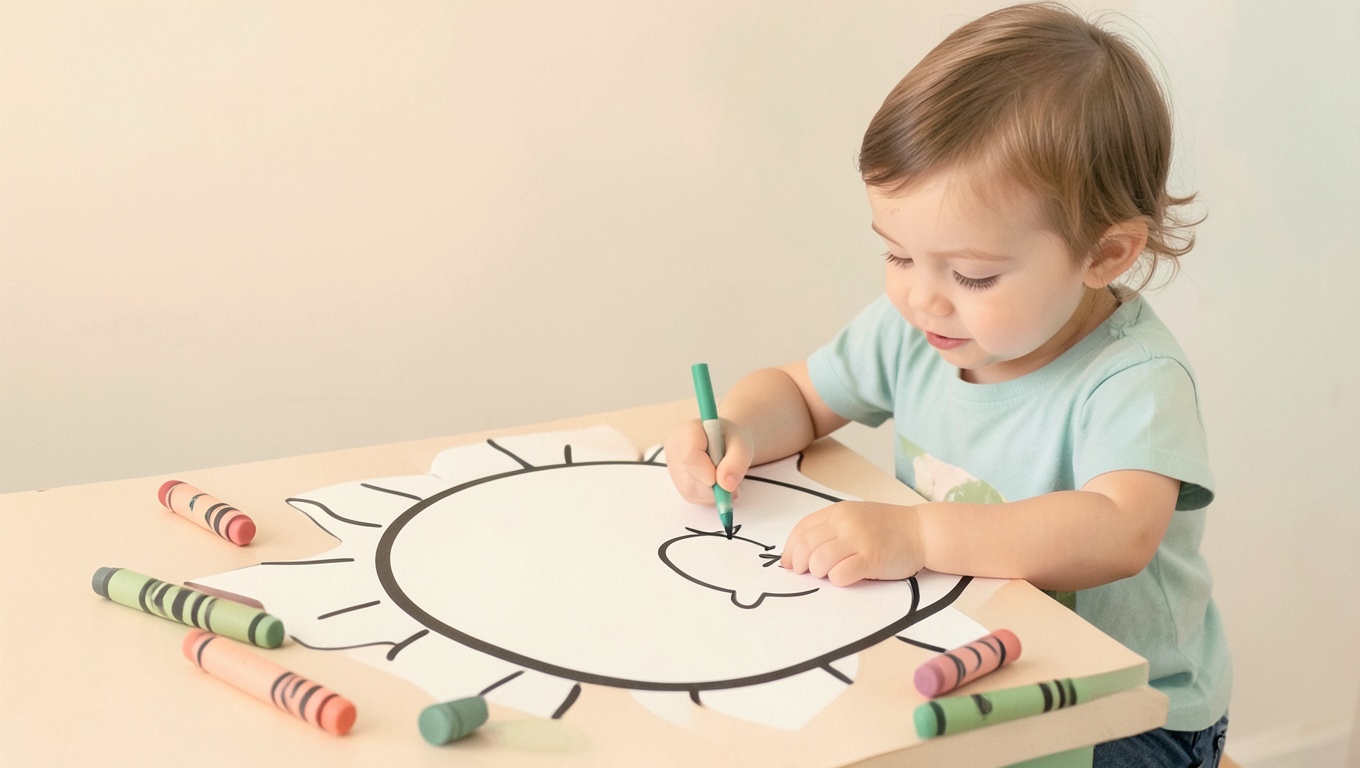
What you’ll see: around 12–15 months, a child given a chunky crayon will make marks — usually by banging or dragging with a whole-fist (palmar) grip. By 18–24 months they start to imitate what you do: a back-and-forth scribble, a round-and-round scribble, maybe a rough vertical line after watching you draw one. Marks go everywhere, including off the paper.
What to offer: big chunky crayons or egg-shaped crayons that fit a fist, washable, on large paper taped to the table or an easel. A “coloring page” at this age is really just paper with a friendly picture on it; nothing about staying inside lines is meaningful yet.
How to help: draw alongside them, narrate (“round and round”), and keep it to a few minutes. Vertical surfaces — an easel, paper taped to a wall or the fridge — build shoulder stability that later grip depends on.
Ages 2–3: lines, circles, and the first sense of “inside”
What you’ll see: between 2 and 3, most children can imitate a vertical line, a horizontal line and a circular scribble, and by about 3 can copy a circle that looks like a circle. Grip shifts from the fist to a “digital pronate” hold — fingers pointing down toward the paper, palm down. They begin to notice a shape on the page and make some attempt to color on it, though they’ll happily go across the lines.
What to offer: pages with one or two very large shapes and thick bold outlines — a big sun, a single balloon, a simple fish. Chunky crayons still, or thick triangular crayons/pencils. Our easy coloring pages are built for this stage.
How to help: name colors and shapes, let them choose colors (a blue dog is fine), and do not correct. Short sessions; stop while they’re still interested.
Ages 3–4: big shapes, emerging control
What you’ll see: at 3–4 most children color with obvious intent — they aim at the shape, cover most of it, and cross the lines less. They can copy a cross and start to use a static tripod grasp (thumb and two fingers, moving mostly from the wrist). Pressure is often heavy; crayons snap.
What to offer: medium-simple pages — a few large shapes per page, still thick lines. Regular crayons and thick colored pencils; chunky crayons if small ones keep breaking. Pages with a clear, familiar subject hold attention longer than abstract ones.
How to help: model coloring one shape slowly; talk about “filling it up” rather than “staying in the lines.” Hand-strength play — playdough, squeezing sponges, tearing paper — does more for coloring than more coloring does.
Ages 4–5: staying inside the lines starts to click
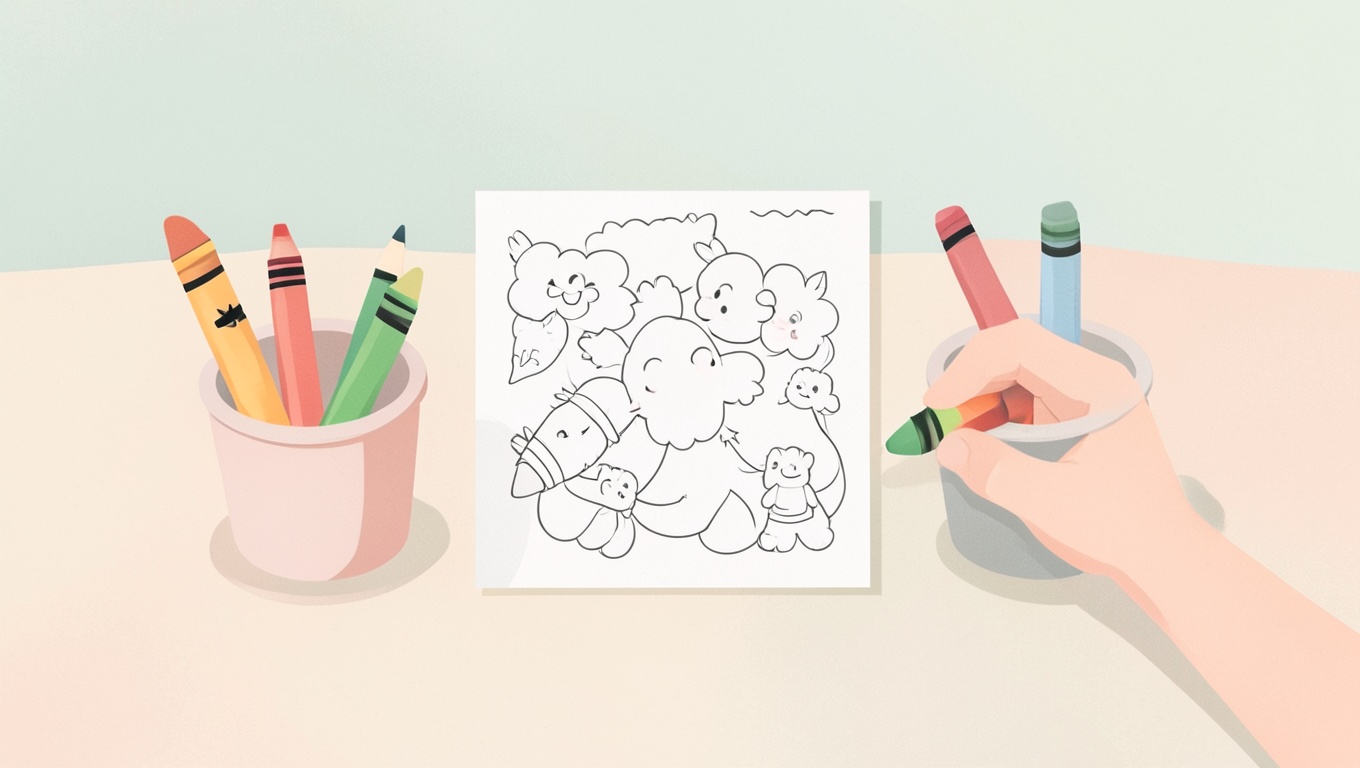
What you’ll see: between 4 and 5 the dynamic tripod grasp arrives for many kids (fingers do the moving, not the wrist), they can copy a square and later a triangle, and they color large shapes with most of the color inside the outline. Stroke direction becomes more consistent. Small shapes and thin lines are still hard.
What to offer: pages with moderate detail and medium line weight; standard crayons and colored pencils; first washable markers if you want them. Themes they choose — animals, vehicles, characters — matter more than ever for attention.
How to help: if the grip is still fisted at 4½–5, try short triangular pencils or golf pencils that make a tripod grip easier, and mention it at the next check-up. Otherwise, leave the grip alone; many kids settle into a workable one on their own.
Ages 5–6: neatness, direction, and patience
What you’ll see: by 5–6 most children color neatly inside the lines on ordinary coloring-book pages, control pressure better, and can change stroke direction to follow a shape. They begin to care about the result and can be hard on themselves.
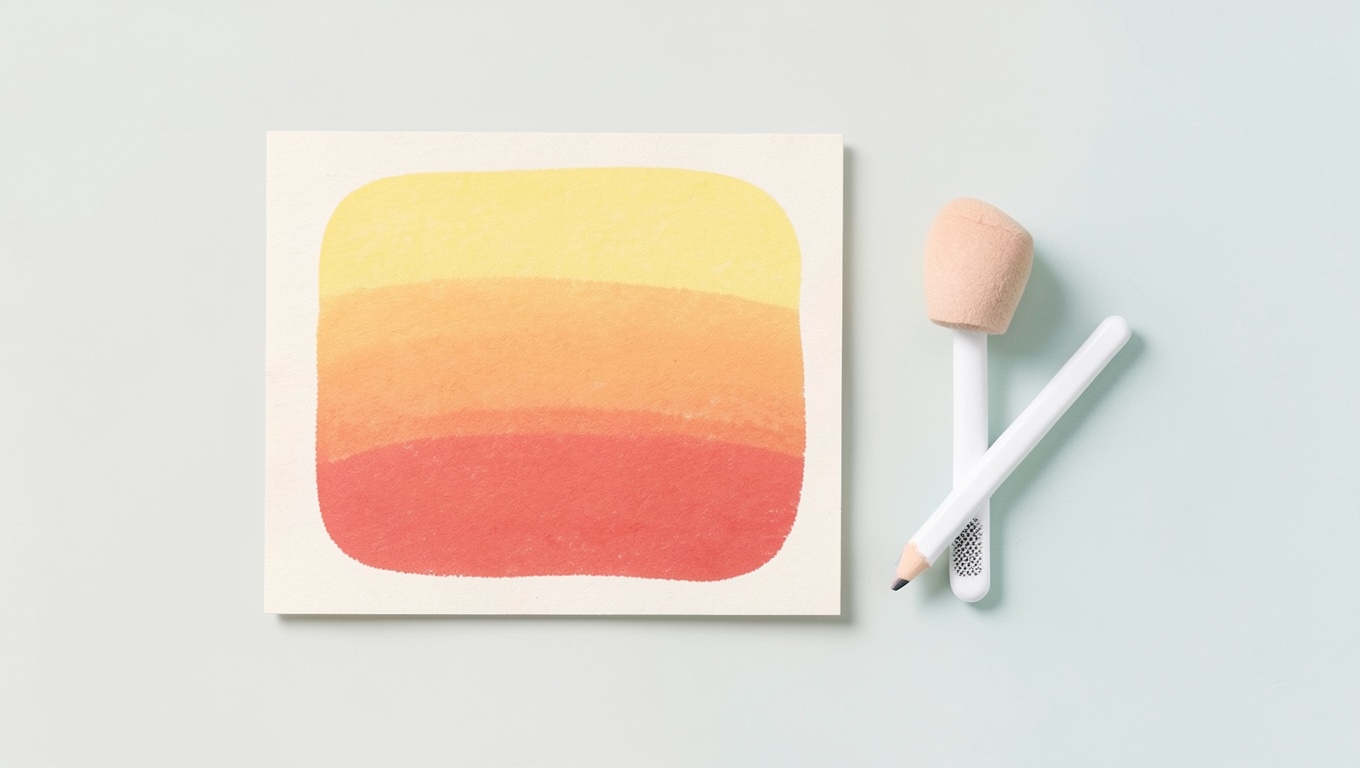
What to offer: standard coloring pages, thinner lines, smaller areas, more detail. Colored pencils come into their own here because they allow precision. This is a good age to introduce one simple technique — light pressure, then a second layer — without turning it into a lesson.
How to help: praise the effort and the choices (“you used three greens”), not neatness. Let them abandon a page; finishing is not the goal.
Ages 6–8: shading, detail, and the start of style
What you’ll see: from about 6, children can shade lighter and darker, blend two colors, follow fine detail and finish a full page. They develop preferences — some love intricate pages, some want to draw their own.
What to offer: anything from the adult shelf that isn’t microscopic: mandalas, detailed animals, scenes. Good colored pencils (a decent 24-set), fine markers. Our dinosaur and mandala pages both suit this range.
How to help: if they’re interested, show one real technique at a time — our colored pencils for beginners guide is written for adults but every step applies to an eight-year-old who wants it.
A quick reference table
| Age | Typical marks | Typical grip | Best pages | Best tools |
|---|---|---|---|---|
| 12–24 mo | Spontaneous scribble; imitates back-and-forth | Fist (palmar) | Any picture on big paper | Chunky / egg crayons |
| 2–3 yrs | Imitates lines; circle by ~3 | Fingers-down (digital pronate) | 1–2 huge shapes, thick lines | Chunky or thick triangular crayons |
| 3–4 yrs | Copies cross; aims at shapes | Static tripod emerging | Few large shapes, thick lines | Regular crayons, thick pencils |
| 4–5 yrs | Copies square; mostly inside lines on big shapes | Dynamic tripod | Moderate detail, medium lines | Crayons, pencils, washable markers |
| 5–6 yrs | Neat on standard pages; direction control | Dynamic tripod | Standard coloring-book pages | Colored pencils, markers |
| 6–8 yrs | Shading, blending, fine detail | Mature | Detailed pages, mandalas | Good pencils, fine markers |
How to help without pushing
- Match the page to the stage. The fastest way to lose a three-year-old is a page designed for a six-year-old. Thick lines and big shapes first; detail later.
- Keep sessions short and stop before the wobble. Five minutes at two, ten to fifteen at four, as long as they like at seven.
- Don’t correct colors or lines. “Inside the lines” arrives with motor control; nagging doesn’t speed it up and does make coloring feel like a test.
- Build the hands elsewhere. Playdough, tongs, stickers, tearing, squeezing, threading. Stronger hands and steadier shoulders make coloring easier without any coloring.
- Go vertical sometimes. Easels and wall-taped paper put the wrist in an extended position that supports a good grip.
- Left-handed child? Same milestones, same tools; seat them so their arm isn’t bumping a right-hander, and let them angle the paper.
When to ask a professional
Normal variation is wide, and interest is not ability. That said, it is reasonable to mention it to your pediatrician — who may suggest an occupational therapy screen — if a child is around 3 and shows no interest in making marks and can’t imitate a line or circular scribble; if at 4–5 the grip is still a full fist or the child avoids any drawing or coloring; or if at 5–6 they can’t copy a cross or square and find coloring frustrating. Those are conversations, not diagnoses, and early OT support for fine-motor skills is common and effective.
Frequently asked questions
At what age should a child color inside the lines?
Roughly 4–5 for large, simple shapes and 5–6 for standard coloring-book pages, with plenty of normal variation either side. Before 4, “inside the lines” isn’t a realistic expectation.
My 4-year-old still scribbles over everything — should I worry?
Probably not. Check the page isn’t too detailed, offer one big shape, and look at grip and hand strength rather than the coloring itself. If the grip is still fisted and they avoid drawing entirely, mention it at the next check-up.
Is coloring good for handwriting?
Yes, indirectly: it builds the grasp, pressure control and hand endurance that writing uses. It is not a substitute for the other hand-strength play listed above.
How long should a coloring session be?
As long as it’s enjoyable: a few minutes at two, ten to fifteen at four, open-ended by six or seven. Stop while it’s still fun.
Crayons or markers first?
Crayons. They need pressure (which builds strength), don’t dry out, and don’t bleed. Markers are fine from around 4, once the child isn’t mashing the tip.
Should I teach my child the “right” grip?
Offer tools that make a good grip easy — short, triangular, chunky — and let it develop. Direct correction rarely helps before 4–5 and often just makes the child avoid coloring.
For what to actually put in the child’s hand at each stage, and why, our guide comparing crayons, colored pencils and markers by age goes deeper — and if you want pages sized for the youngest colorers, start with the easy coloring pages collection.